
SERIES | DOCUMENTARIES | ORIGINAL PRODUCTION
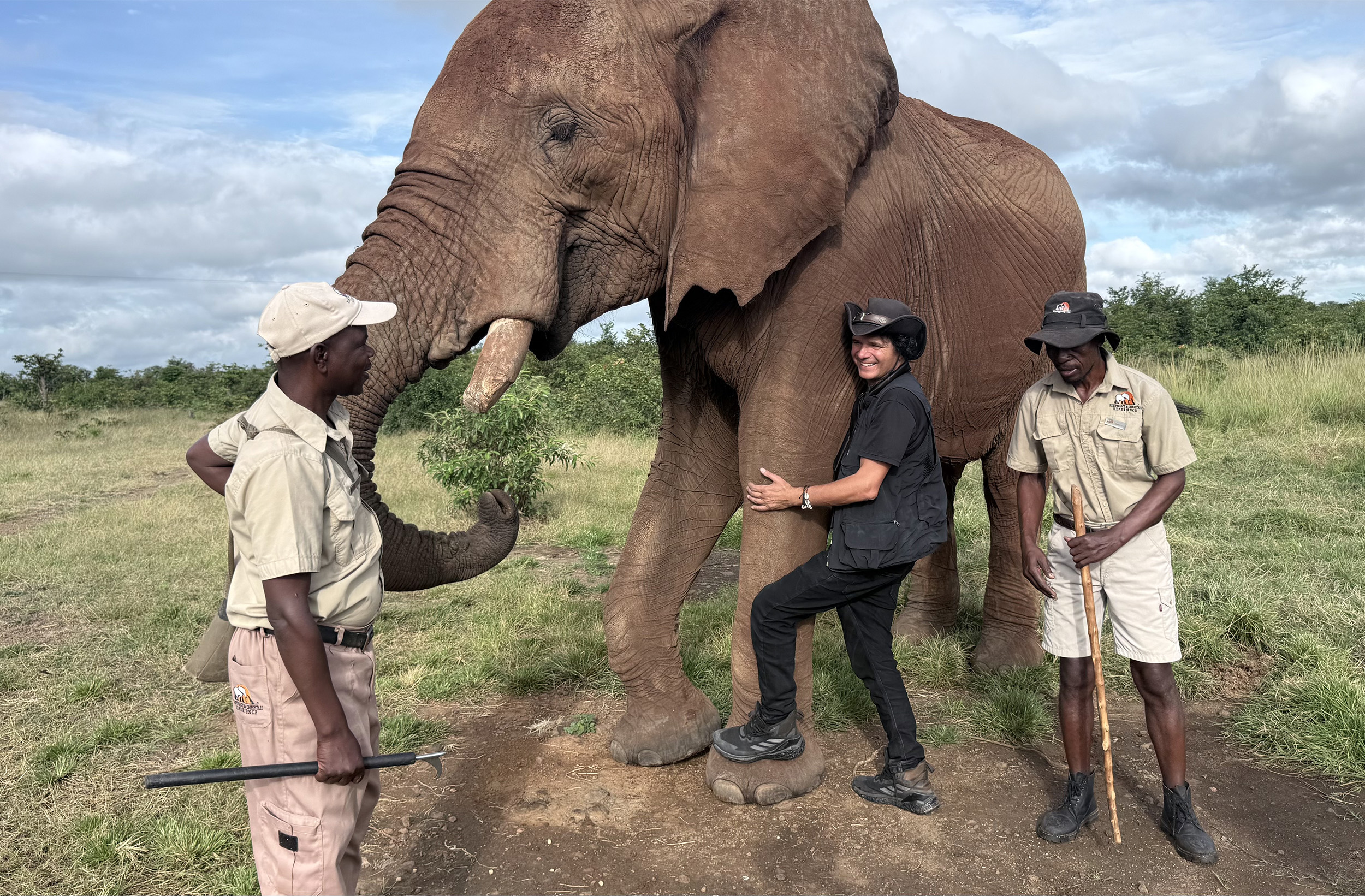
- The journalist and documentary filmmaker present an unfamiliar Africa in Canal 13’s new program: “I encountered absolutely spectacular neighborhoods, and a Black billionaire class proud of its roots.”
- The series not only explores natural landscapes but also captures metropolises filled with skyscrapers and vibrant urban life.

- Africa cannot be reduced to images from National Geographic—lions, elephants, and safaris. Jorge Said shifts the focus to the people, the modernity, and the profound human stories.

Following the success of ‘Buscando a Dios’ (Searching for God) and ‘El peregrino’ (The Pilgrim), Jorge Said—adventurous journalist and war correspondent—returns to television with ‘África salvaje’ (Wild Africa). Produced by Canal 13’s cultural division, this series promises to transform our perception of the so-called “Dark Continent.”
DISCOVERING THE REAL AFRICA
For many, Africa is summed up by images from National Geographic: lions, elephants, and endless savannas. Jorge Said, however, reveals unique facets of this continent. Although the series does feature the famous “Big Five” (lion, leopard, elephant, rhinoceros, and buffalo), its primary focus lies on the people, the modernity, and the deep human stories found there.
“We always tend to speak of a continent as if it were a single monolithic entity. In the case of Africa, this constitutes a slight misconception, for Africa comprises 54 distinct nations—each vastly different from the next,” explains the documentary filmmaker. He adds, “It is not merely a ‘wild’ Africa; it is a humanitarian, cultural, and historical Africa—a place that reminds us that this is where humanity was born, the very origin of the human condition.”

The series goes beyond exploring natural landscapes; it delves deep into metropolises teeming with skyscrapers and vibrant urban energy. “You never see this Africa—the Africa of cities and technological advancements. I encountered absolutely spectacular neighborhoods, home to a Black billionaire class that is fiercely proud of its roots,” recounts the journalist, who emphasizes that the program aims to dismantle the fundamental prejudices we hold regarding the continent.
To bring ‘África Salvaje’ (Wild Africa) to life, the team spent nearly 200 days on the road without returning to Chile, visiting approximately 20 countries—most notably Ethiopia, South Sudan, Rwanda, Uganda, Tanzania, Zimbabwe, and Botswana. This entire journey was undertaken aboard a specially outfitted yellow truck, which became the journalist’s home.

‘The Yellow Truck Takes Center Stage’
“It was our mobile home; it allowed us to reach places where planes cannot land and where no other vehicle can go. In Africa, the roads are notoriously poor, but the truck enabled us to get up close to some truly extreme locations,” comments Said regarding this mode of transport, which allowed him to immerse himself in the local reality in a raw and direct manner.
‘The Soul of a Continent’
From the pyramids of Egypt to the Okavango Delta in Botswana—passing through the source of the Nile and the majestic Victoria Falls ‘África Salvaje’ offers a journey that is both spiritual and physical, airing Saturdays during the late-night prime-time slot on Canal 13. Said explores the origins of humanity by visiting the site where “Lucy” was discovered in Ethiopia, and analyzes contemporary conflicts such as the struggle for mineral resources (cobalt and coltan) in the Congo.
“Africa is a continent teeming with life a place where Christianity finds its very foundation. It is an Africa that takes pride in its past a past marked by the suffering of slavery and colonization yet one that today is reclaiming its indigenous names and local languages,” reflects Jorge.

For the journalist, this program is far more than just a travelogue; it represents his most personal and ambitious undertaking to date. “I have almost always produced programs on my own, but this particular series demanded a level of physical endurance that no one else could match. Ultimately, I found myself feeling comfortable working solo once again—taking risks I wouldn’t have dared to take had I been accompanied by a full crew,” said the journalist.