
BUSINESS | PRODUCTION | INVESMENTS | FORUMS | ENTERTAINMENT
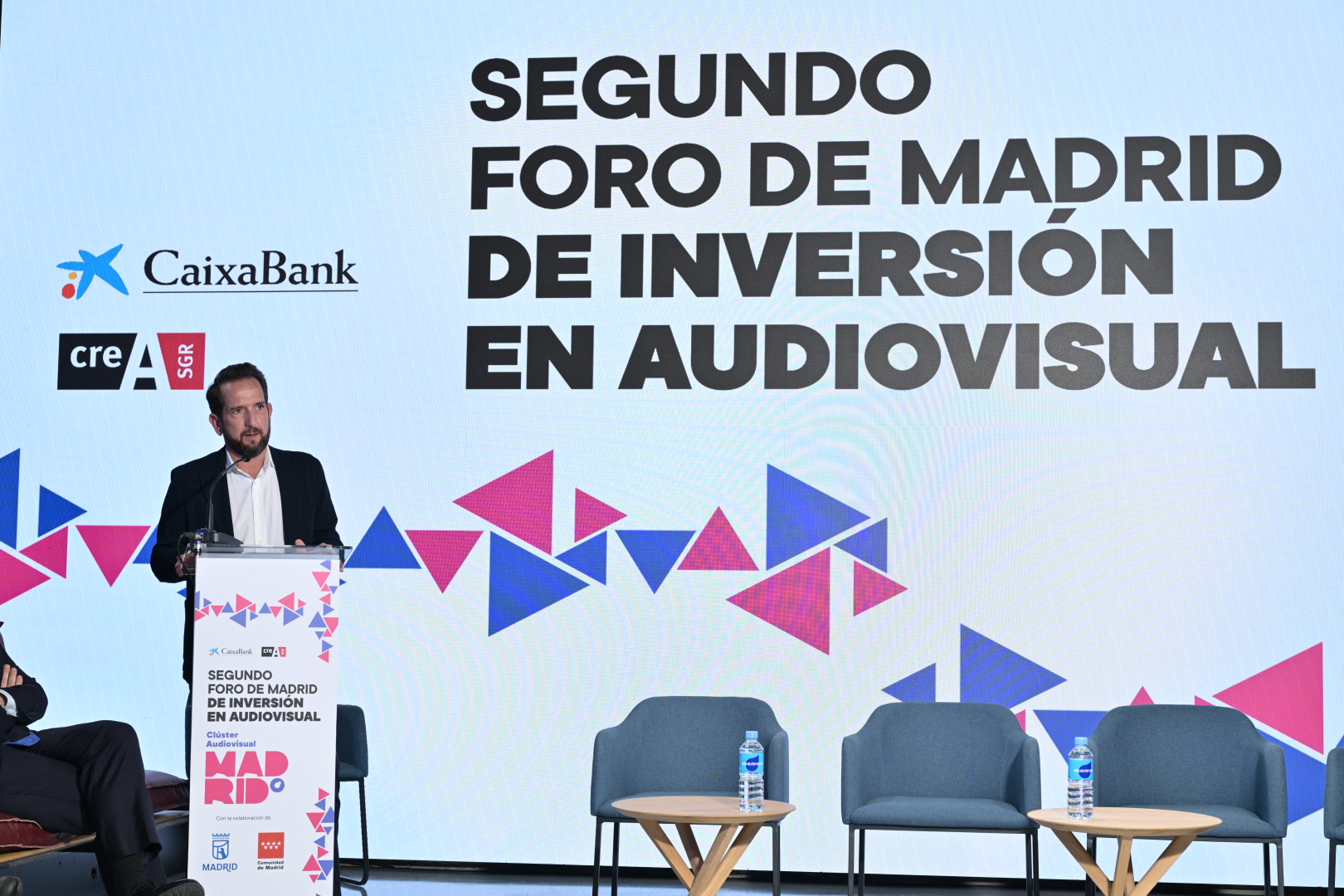
The event served as a meeting point for industry professionals, facilitating the exchange of experiences and the creation of business contacts among producers, investors, and institutional representatives.
The Forum is part of the roadmap to improve competitiveness and facilitate access to financing.
Advertising

The second edition of this event, organised by the Madrid Audiovisual Cluster, in collaboration with the Madrid City Council and the Regional Government of Madrid, and with the support of CREA SGR and Caixabank, brought together institutional representatives, financial entities, investment funds, production companies and industry experts to address the evolution of bank financing, the role of private equity and other alternative funding models within the audiovisual industry. The Caixabank All in One space hosted the second edition of the Madrid Audiovisual Investment Forum this Wednesday, an initiative promoted by the Madrid Audiovisual Cluster to explore the challenges and opportunities arising from new financing models in the industry.
The fully booked event also served as a meeting point for industry professionals, facilitating the exchange of experiences and the creation of business contacts between producers, investors and institutional representatives. Attendees were able to explore potential synergies, generate new collaboration opportunities and strengthen their professional networks in an environment conducive to business dialogue and connection.
The programme included panels dedicated to bank financing for the audiovisual sector, with the participation of CREA SGR, Caixabank and several production companies; sessions on alternative financing; and analyses of the role of private equity, specialised funds and investment vehicles linked to technological transformation. The institutional opening session featured Raúl Berdonés, President of the Madrid Audiovisual Cluster; Javier Hernández Sánchez, Director of Institutional Banking at Caixabank; Manuel Beltrán, Director General of Institutional Relations and Strategic Projects at Madrid City Council; and Luis Martín, Deputy Minister of Culture, Tourism and Sport of the Regional Government of Madrid. During his speech, the President of the Cluster thanked institutional stakeholders for their support and continued backing of the Madrid audiovisual ecosystem, as well as the involvement of partner organizations, members and the organization’s board of directors.
The event is part of the Cluster’s strategy to reinforce competitiveness and consolidate Madrid’s international positioning as an audiovisual hub. As highlighted by Raúl Berdonés, the organisation currently brings together 127 organisations across the entire value chain — companies, associations, academic institutions and training centres — with the aim of promoting innovation, strengthening the business fabric and generating new development opportunities. He also emphasised that the Forum forms part of the roadmap aimed at improving competitiveness and facilitating access to financing.
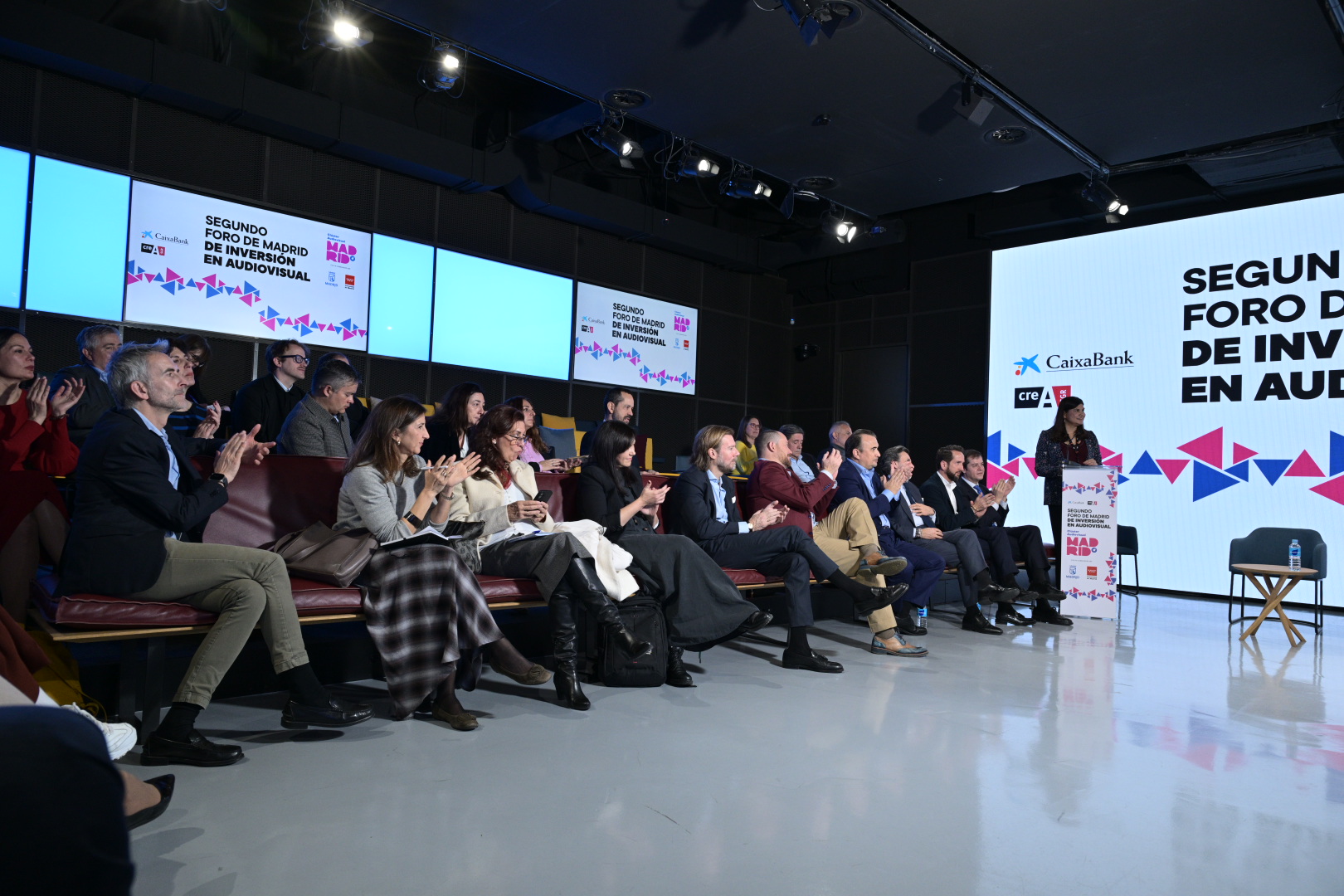
Inauguración

La inversión en la cadena de valor
Financiación alternativa de proyectos
La inversión directa de SETT
During the event, Javier Hernández Sánchez highlighted Caixabank’s commitment to supporting the audiovisual sector; Manuel Beltrán underscored Madrid’s role as an attractive hub for filming and investment; and Luis Martín stressed public-private collaboration as a driver of growth. One of the key priorities for industry development is facilitating access to financing. In this context, the Forum examined both the evolution of bank financing and complementary alternatives, as well as the entry of investors into company equity.
Advertising

The evolution of bank financing in the audiovisual sector
The first technical panel featured Pedro Martín, Head of the Audiovisual and Culture Area at CREA SGR, who explained how guarantees work and their impact on reducing financial risk; and Eduardo Gómez, Director of the Cuzco Business Centre at CaixaBank, who spoke about specific banking financing instruments for production companies and sector businesses. Clara Lago, General Director of Caballo Films, provided a business perspective on real financing needs; and Kiko Martínez, producer and CEO of Nadie es Perfecto and President of the Audiovisual Cluster of the Valencian Community, defended financial structures adapted to production cycles and rights retention strategies. The session was moderated by Irene Jiménez, co-founder of Audiovisual 451, who guided the discussion on the evolution of credit and banking specialisation in the audiovisual field.
Advertising

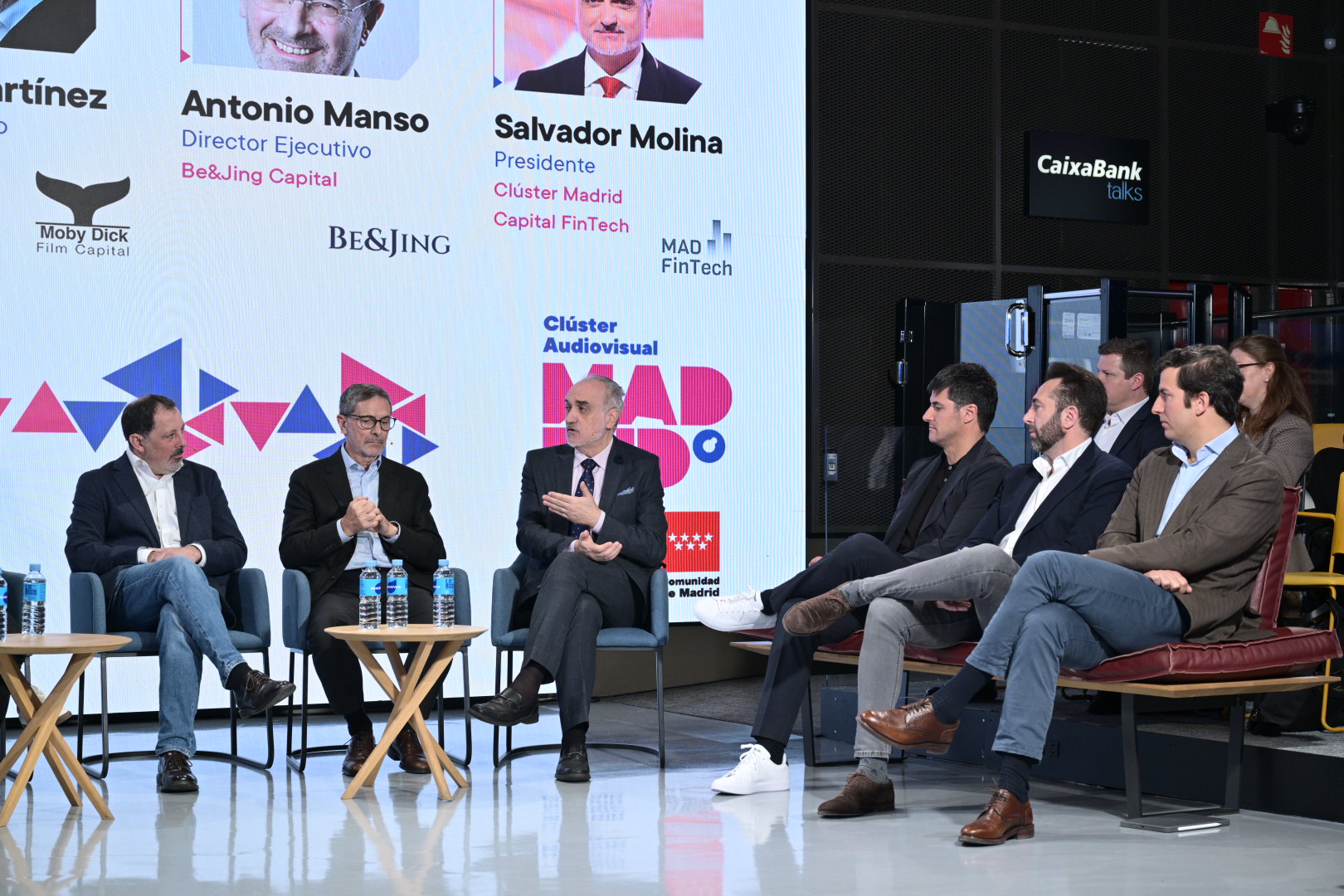
Alternative financing for audiovisual projects
In the session dedicated to non-bank financing, moderated by Jesús Prieto, CREA SGR board member, the focus was placed on alternatives to traditional credit and on ways to stimulate projects through more flexible and innovative structures. Patricia López, Director of Sego Creative, discussed new financial structuring models and the importance of designing tailored schemes combining different instruments adapted to the nature and stage of each project.
Jesús Martínez, Technical Advisor at Moby Dick Film Capital, explained hybrid financing models and private investment mechanisms applied to projects, highlighting how the combination of private capital, tax incentives and alternative formulas can improve project viability and attractiveness for investors. Antonio Manso, Executive Director of Be&Jing Capital, focused his speech on specialised investment solutions, emphasising the professionalisation of financial vehicles and the need for robust structures capable of generating trust and sustainable returns. The session closed with Salvador Molina, President of the Madrid FinTech Capital Cluster, who discussed the decisive role of financial technology in diversifying resources, stressing how digitalisation, fintech collaborative platforms and advanced solutions are expanding access to financing and transforming the investment system.
Private equity investment across the value chain: the GOROS Investments case
This practical analysis featured Javier de Ros, Founding Partner of GOROS Investments, who presented the fund’s investment strategy in companies within the sector, and Hernán Pérez, Executive Managing Director of The Workout Group, who detailed the company’s growth experience following capital entry. Equity investment enables companies to grow, consolidate employment and undertake larger-scale projects, as well as face expansion and acquisition processes. In the case of production companies, it strengthens their ability to develop large-scale productions and improves their positioning in intellectual property rights management.
Advertising

Specialised funds: the Culture Cap 7 Fund case
In the discussion focused on specialised funds, led by Andrés Sánchez Pajares, CEO of FILMIKA, the role of sector-specific investment vehicles was addressed as a key tool for professionalising and scaling audiovisual financing. The panel included María Coronado, Audiovisual Director at the Spanish Society for Technological Transformation (SETT), who presented the public strategy to stimulate the sector. Coronado detailed priority lines aimed at strengthening competitiveness, fostering technological innovation and attracting international investment. Alfonso del Río, Director of Culture Cap 7 Fund, discussed the fund’s investment approach, focused on audiovisual projects with global reach. During his presentation, he highlighted selection criteria, the search for talent with international projection potential and the commitment to content with multi-window and multi-market potential.
Advertising

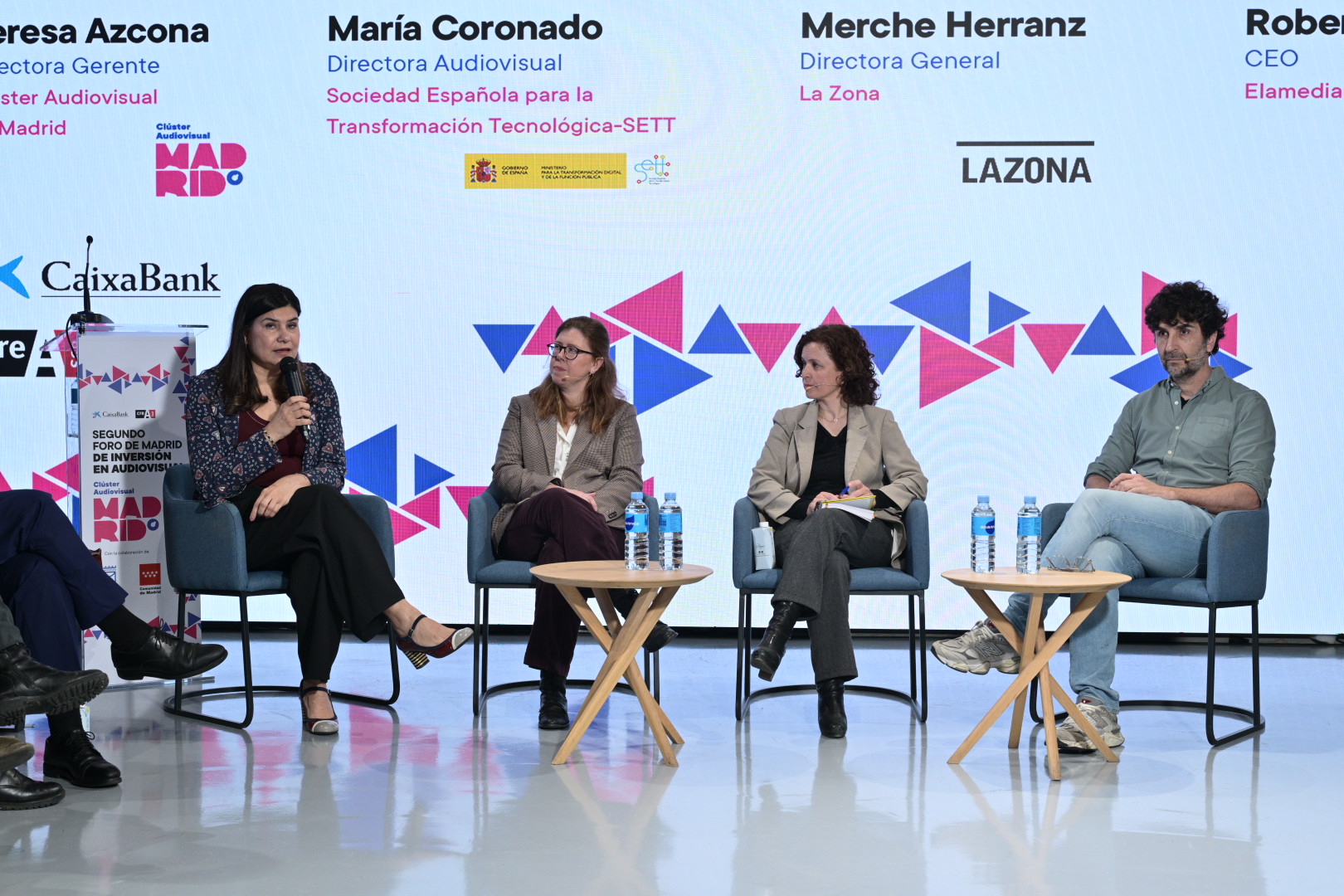
Direct investment by SETT in the audiovisual sector
The final presentation, moderated by Teresa Azcona, Managing Director of the Madrid Audiovisual Cluster, once again brought together María Coronado, who delved into SETT’s direct investment instruments and their role in strengthening the audiovisual ecosystem. She explained how these tools aim to facilitate access to financing and support projects with growth potential and international projection.
Merche Herranz, General Director of La Zona, shared her business experience working with public investment, highlighting the value of public-private cooperation to drive solid and sustainable projects. Roberto Butragueño, CEO of Elamedia, analysed the impact of financial support on corporate growth, stressing how strategic investment can foster expansion and consolidation of sector companies.
Advertising

CONCLUSIONS
The closing remarks were delivered by Javier Hernández Sánchez, Director of Institutional Banking at Caixabank, who emphasised the importance of strengthening collaboration between public administrations, financial institutions and private investors to consolidate a stable, competitive financing framework adapted to the specific characteristics of the audiovisual sector. Throughout the Forum, it became clear that the combination of banking instruments, alternative financing models and capital vehicles has become a decisive factor in stimulating business growth, improving professionalisation and strengthening the internationalization capacity of the Madrid audiovisual sector. The different sessions successfully integrated institutional vision with market perspectives, highlighting the growing importance of non-bank complementary financing and specialised funds. These tools are becoming key instruments to structure larger-scale operations, optimise risk management and enhance the attraction of private investment into the sector.
In conclusion, the 2nd Madrid Audiovisual Investment Forum confirmed that, in the face of current challenges, the Madrid audiovisual sector has a solid business base and increasingly sophisticated financial mechanisms to face a new phase of expansion and consolidation at both national and international level.
Advertising

Redacción TVMAS